

.jpeg)
Monitoring Wuthering Heights from stage to moor
Emerald Fennell’s Wuthering Heights brings one of literature’s most intense relationships back to the screen, with Margot Robbie as Cathy and Jacob Elordi as Heathcliff. Backed by Warner Bros. Pictures and LuckyChap Entertainment, and photographed by Linus Sandgren, the production moved between controlled stage work at Sky Studios Elstree and exposed locations on the Yorkshire moors.
Keeping a consistent eye on performance, framing, and continuity across those very different environments meant building a monitoring and review workflow that could stretch for miles.
Inter-stage work: extending the video village without overbuilding the rig
At Elstree, the brief for the video department was to provide the director, DP, and producers with reliable live and playback monitoring across stages and departments, without rolling out a full QTAKE cart for every move.
The core capture path remained deliberately simple: SDI from camera into a recorder that could handle straightforward clip recording. By inserting RePro, a live streaming and remote collaboration platform, inline on that SDI path, the team could turn those same signals into secure streams for remote viewing elsewhere on the lot.
Crucially, this didn’t mean re-engineering the cart or replacing existing tools. The combination of recorder and streaming kept the workflow familiar and the physical footprint modest, while extending access to the same image beyond the immediate confines of video village.
Out on the moors: splinter unit in real time
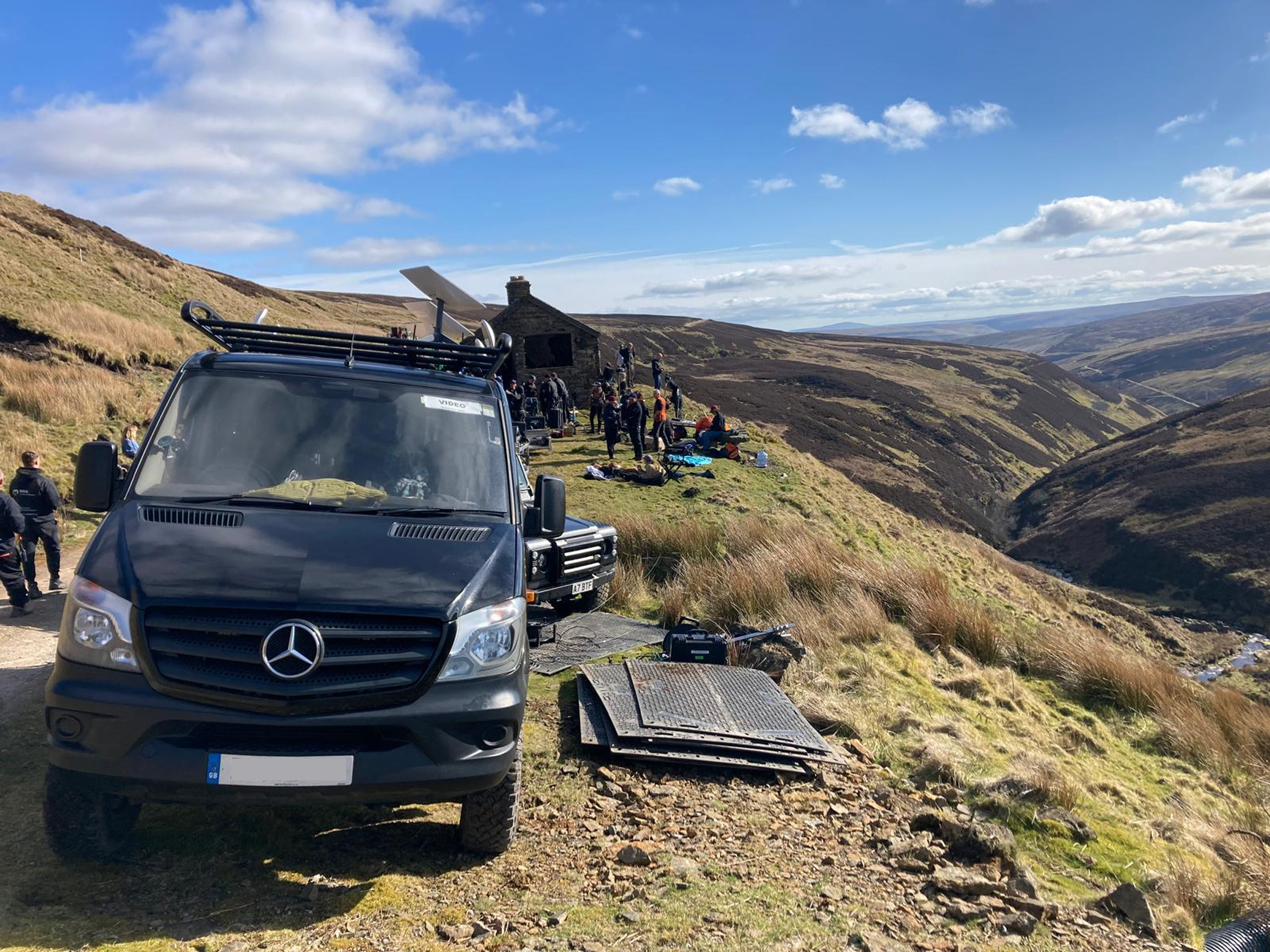
Once the shoot moved north, the challenge changed. The story is rooted in the landscape, so the film spent significant time on exposed moorland in the north-west of England, working out of a remote base with limited infrastructure.
A splinter unit might be operating miles away from main unit on narrow, twisting roads, with weather and light changing by the minute. Traditional end-of-day workflows, such as driving cards back to base or waiting for uploads to creep through a throttled VPN, then making notes, could push creative decisions at least a day behind the action.
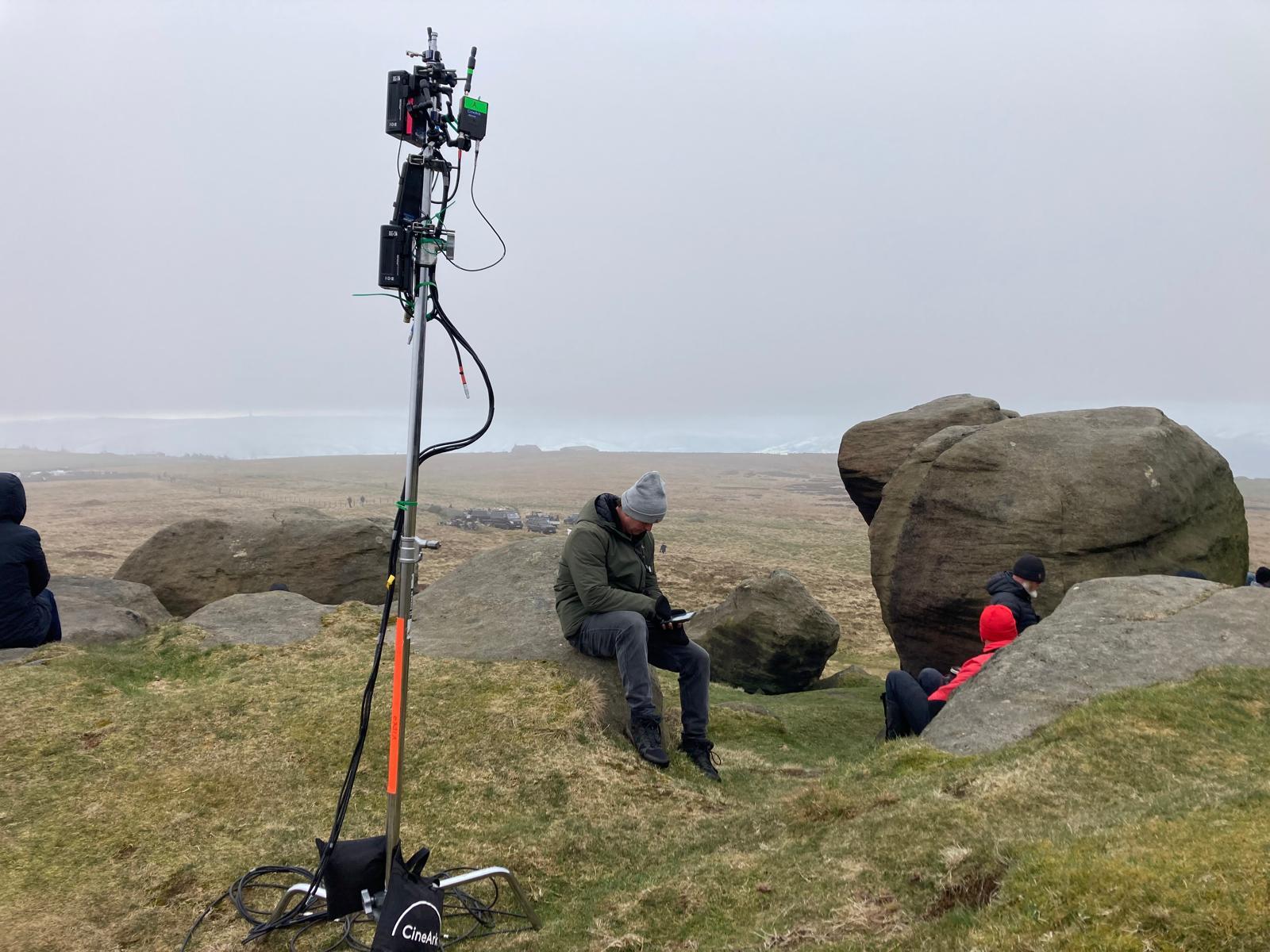
On Wuthering Heights, the splinter unit’s video feeds were streamed back to the director and DP with roughly one second of latency, enabling them to see what was happening on the moor almost as soon as it was captured. “We were filming in the middle of the Yorkshire Moors, with limited signal,” says video operator Zoe Whittaker. “Getting a picture from the second unit back to main unit for director sign-off wasn’t something we could solve by moving people or media; it had to be streamed.”
That live access meant they could check that coverage would cut with material captured earlier on stage, adjust blocking, lens choices, or camera positions while the unit was still in place, and avoid repeating work or discovering coverage gaps after everyone had left the location. For a film so dependent on the interplay between landscape, performance and camera, being able to make those calls in the moment rather than in hindsight had a direct impact on how the show was shot.
A live read on the beats of the day for production
The same feeds weren’t only useful for the director’s team. The monitoring setup was also used to stream material back to the unit base, where producers and the production manager could keep track of progress on both main and splinter units.
Rather than relying on a string of text updates or rushed phone calls, production could open a feed and immediately see what was on the monitors: how a set was dressing, whether a complex shot was nearly there or still in early set-up, or whether the weather was threatening a key exterior. It turned abstract schedule notes into something concrete and visual.
Line Producer Charlie Reed reflects that impact:
“Utilising RePro for the first time across two units in a very remote environment on the Yorkshire Moors on Wuthering Heights worked extremely well for us. Our Director and Producers were able to see feeds from both units, which were physically miles apart and on different shooting hours. Having such a clear picture enabled us to be efficient and nimble with our location work and ultimately helped us achieve our schedule. I would thoroughly recommend RePro and will be using it again on future productions.”
That ability to verify issues visually, rather than interpreting them second-hand, helped the team make pragmatic decisions about when to push on, when to move on and where to adjust the plan.
Working within the limits of rural bandwidth
From a technical standpoint, the most demanding aspect of the show wasn’t the stage work but the network conditions out on location.
The moorland areas offered very low data rates. In those circumstances, traditional cloud review tools can struggle to maintain a stable connection, especially when they sit inside a more complex QTAKE workflow and require additional processing paths such as Pipeline.
Whittaker notes that traditionally, seeing a splinter unit often meant either trying to run fibre between stages, which is only realistic when stages were adjacent, or bringing in a full QTAKE rig with an operator. That level of infrastructure makes sense when the director and DP need full reference and detailed playback, but it is harder to justify when the splinter work is relatively contained; for example, filming a hand insert or a window element on a portable recorder. If that splinter stage was in another building or studio, there was effectively no lightweight way to get the picture back to the main unit.
With only an SDI feed and some form of internet signal, the Wuthering Heights team could send pictures from almost anywhere via RePro, tuning the stream resolution and bitrate to what Starlink or local connectivity could realistically sustain, while keeping the main QTAKE rig (where deployed) focused on its core on-set tasks.
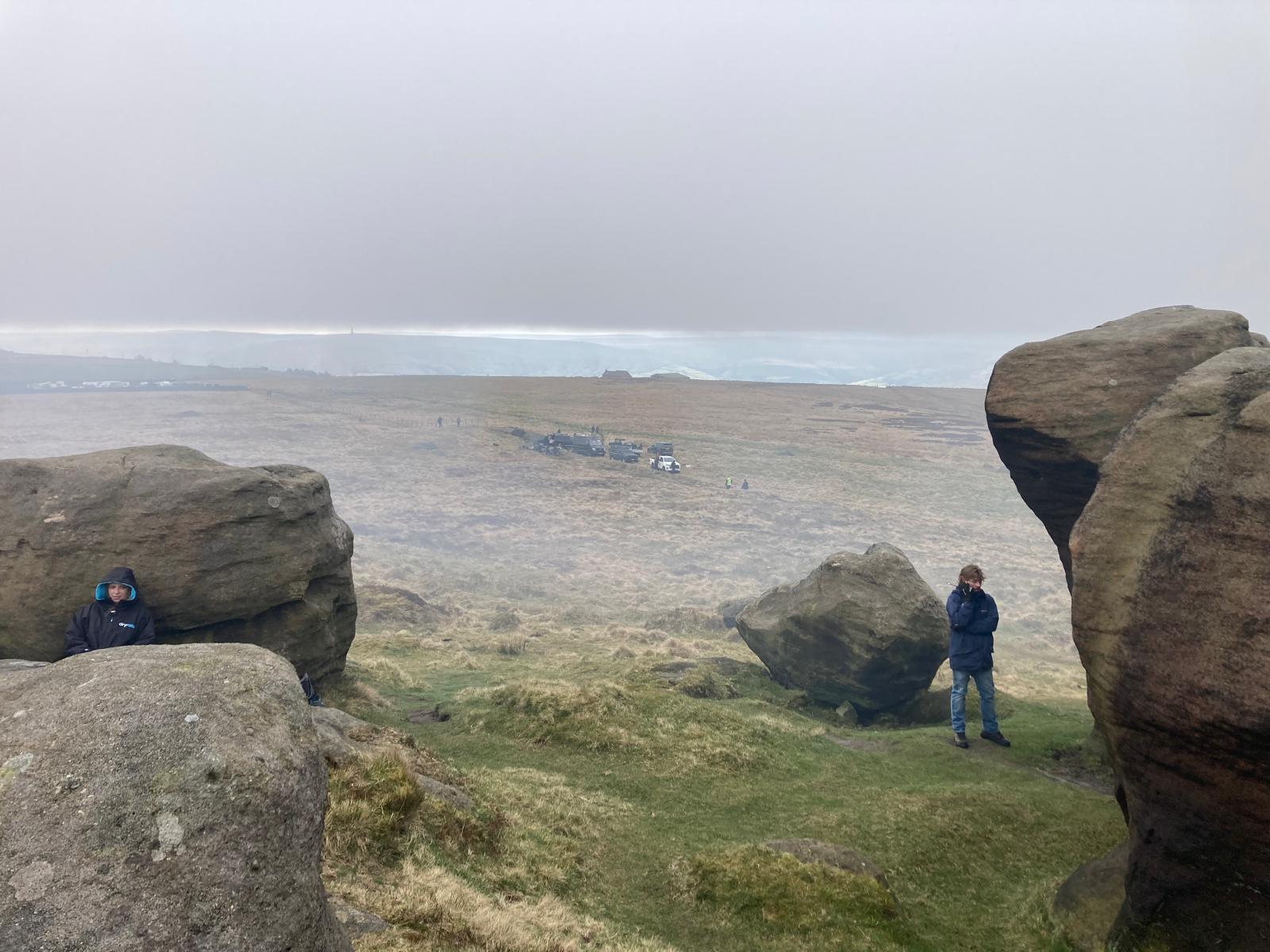
“The advantage for us was being able to treat a splinter day exactly the same, whether it was next door or on another site,” says Whittaker. “You can keep it on a clamshell with an assistant, but still get a picture back to main unit. And because we can adjust things like latency and resolution, we can usually find a setting that works even when the signal is poor.”
The result was that the video department didn’t have to compromise their normal workflow to provide remote access, while production and creatives still saw a clear, responsive picture, even in harsh conditions.
Craft continuity in a distributed production
Wuthering Heights brings together many of Emerald Fennell’s regular collaborators, from Sandgren behind the camera to a returning relationship with LuckyChap, on a project that is both visually ambitious and geographically demanding.
By treating remote monitoring as part of the core production design from the outset, rather than an add-on, the team was able to maintain a consistent creative eye across stages and remote moorland locations, support multi-unit work without putting key decision-makers in a car all day, and give production a much clearer read on how each day was really unfolding.
For cinematographers, directors, and producers facing similarly split schedules – part studio, part remote landscape, often with multiple units running in parallel – the experience on Wuthering Heights points towards a way of working where video village is no longer a single physical tent, but a flexible network that follows the images wherever they’re made.
